Blight and glory
Images and poems from a springtime city

Check in
Have you voted?
We don’t how much longer we will be able to freely vote in this country, so it’s important to exercise this right even in minor elections. The Oregon primary is Tuesday, May 17. I was at a town hall last week where Oregon Secretary of State Tobias Read told the audiance—more than once—to put your ballot in a box at the library or the elections division. Don’t trust the mail.
Broken open
Lately, I’ve been living in a state of stasis, just letting things happen. My life, for the most part, is placid, unexciting and comfortable.
The news is full of stories about places where people are being killed, uprooted, starved and wounded. And in our own country, the quality of life for most people is being steadily undermined.
So how can I remain so comfortable? How do I deserve my tranquil life?
My recent reading helps me understand. Michelle Dowd, in her memoir Forager, describes how the bright red flowers of sarcodes, or snow plant, break through the earth in late spring, often through snow, “bursting with fire.” That image of a bright red growth emerging from white snow reminds my heart to thaw.
Eileen Garvin, in Bumblebee Season, observes the human heart closely, how it turns and stretches and breaks. How it reforms and renews. How it is empty and full, sometimes at the same time. I am trying to find that balance, a good balance.
Shana Targosz writes about children with hearts broken open by the place of death she calls the Underwild, where death lurks everywhere as life struggles to be preserved and cherished. I come away renewed, aware of death but also a fuller life.
In Iona Iverson’s Rules for Commuting, (thanks for the recommendation, Amy Wang!) a clutch of London commuters break the stone-set rules of mass transit: don’t notice others. Don’t make eye contact. Don’t strike up a conversation. But then a life emergency shatters the rules, and their lives and hearts stretch and break and reform. This is a book about what I think of as “bus therapy,” but it goes beyond observation and meditation to examine what makes us human.
Urban blight
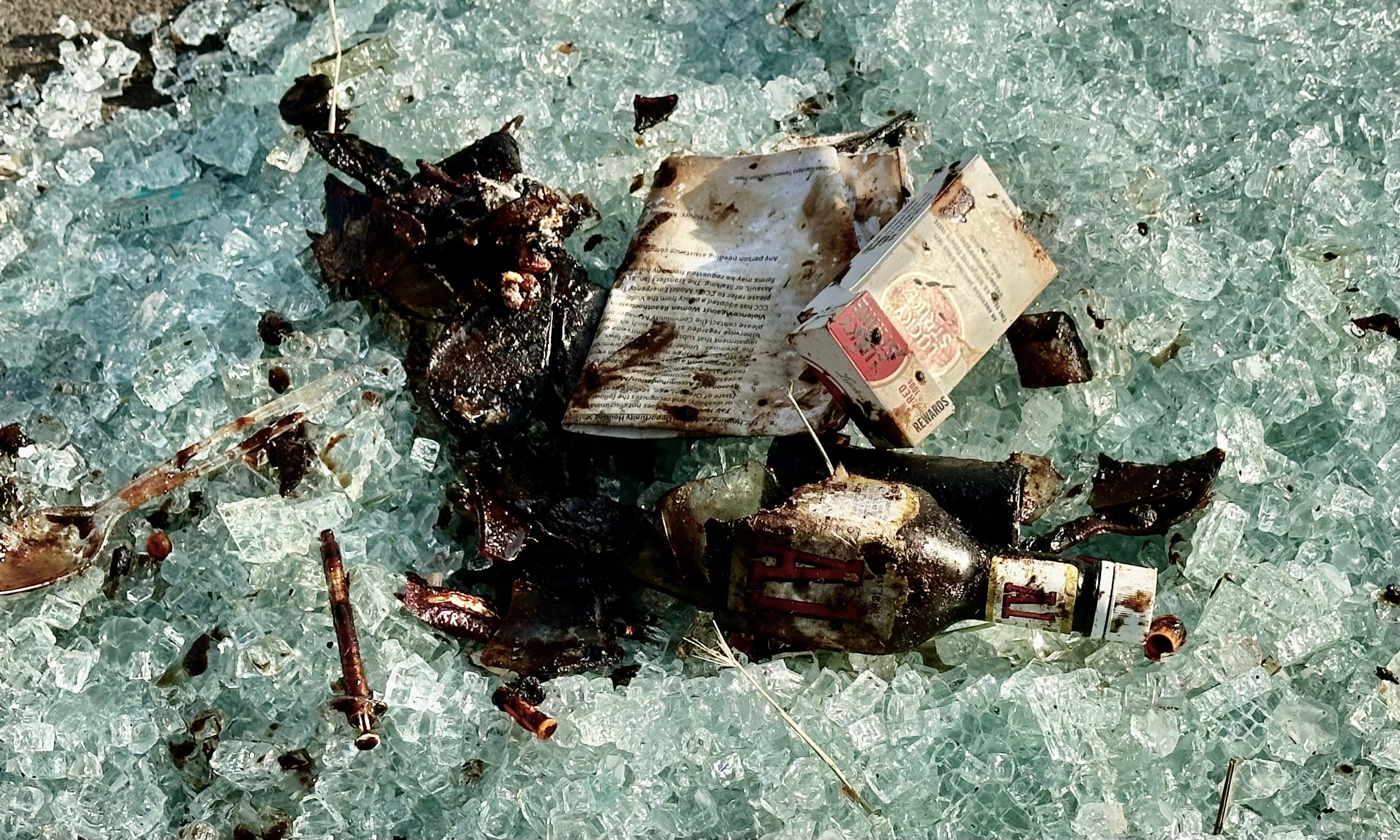
In my photo app, I caption images with keywords like “urban blight” and “urban decay” to keep track of photos I take of things falling apart. Most often, what I tag are buildings. But then I find an image like this one, taken behind a bus shelter on Southeast Belmont. I’m fascinated by the strange confluence of items: a cigarette carton, a broken bottle of Worcestershire sauce, and a page from a tenant’s handbook (I peeked), all laid out on what looks like a bed of ice but actually is broken auto glass.
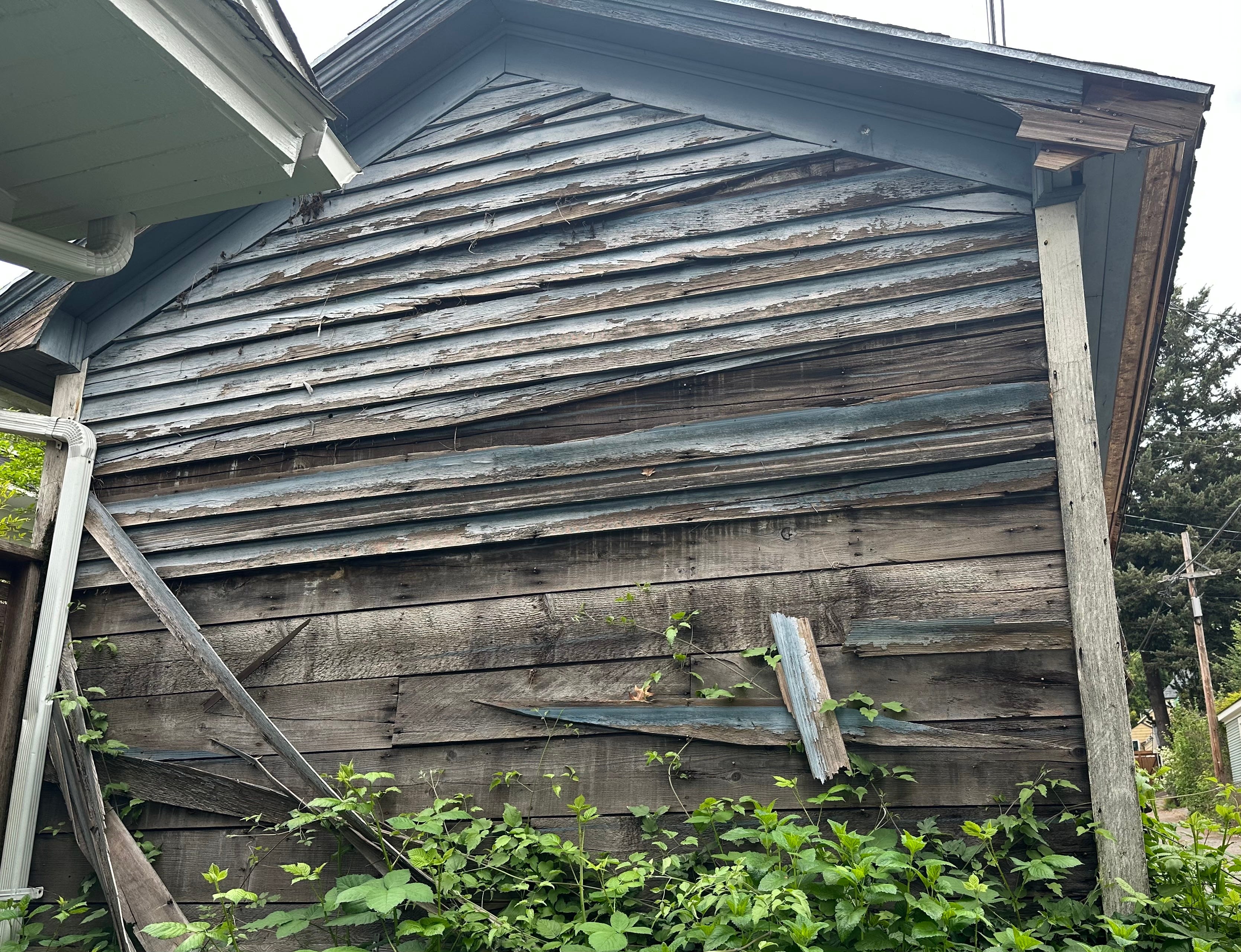
I found this neglected garage on one of the many alleys in Ladd’s Addition. There’s a symphony of meaning in its dilapidation. I see pattern and destruction, tenacious weeds and an enduring cohesion.
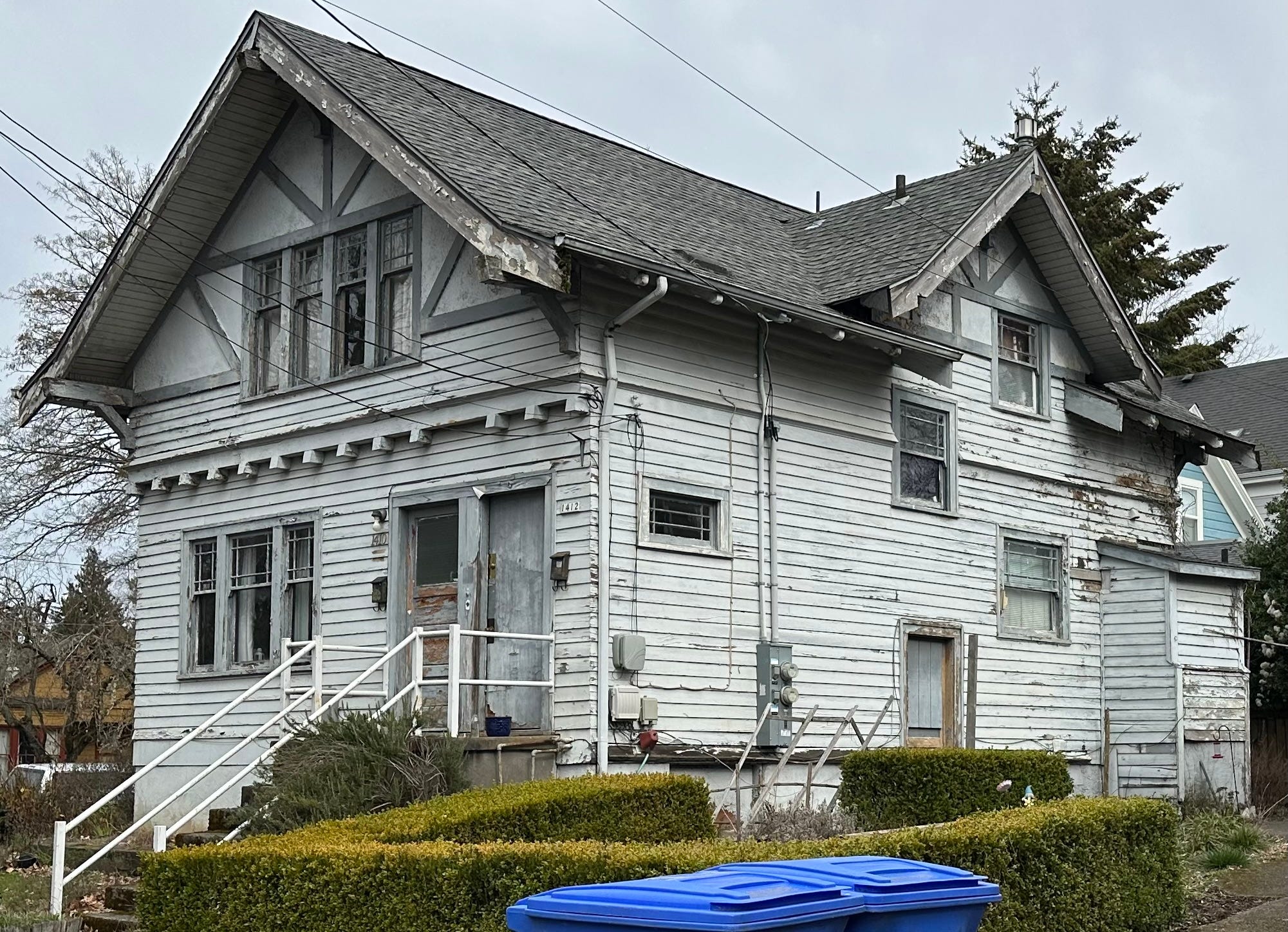
Some houses nearby to me just aren’t kept up. Here is a duplex of doom. I think people may still be living there.
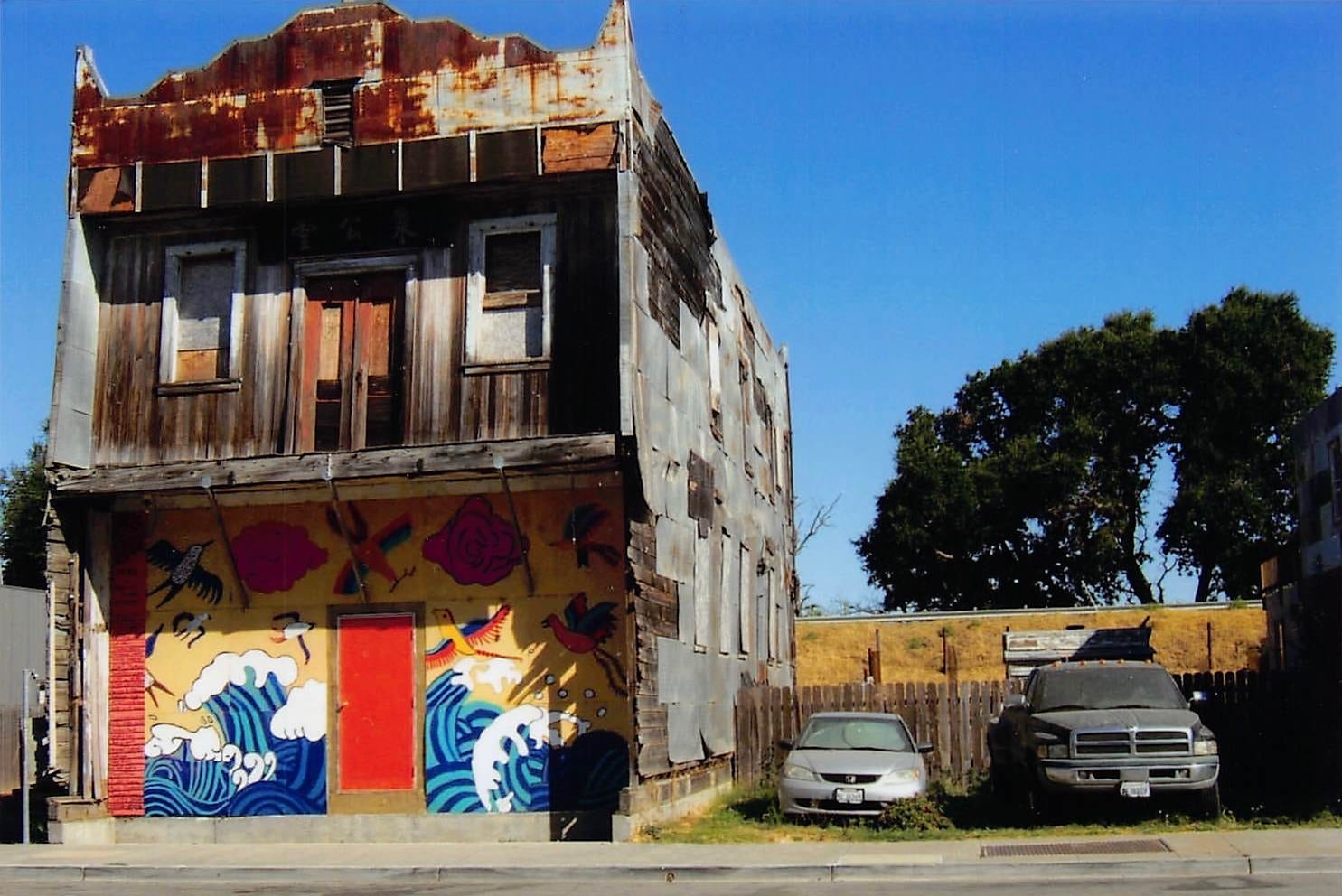
Urban decay can be bright and colorful. I took this photo near the Union Pacific yard in North Portland, but I forget exactly where. It was several years ago, when I was still driving.
Urban glory
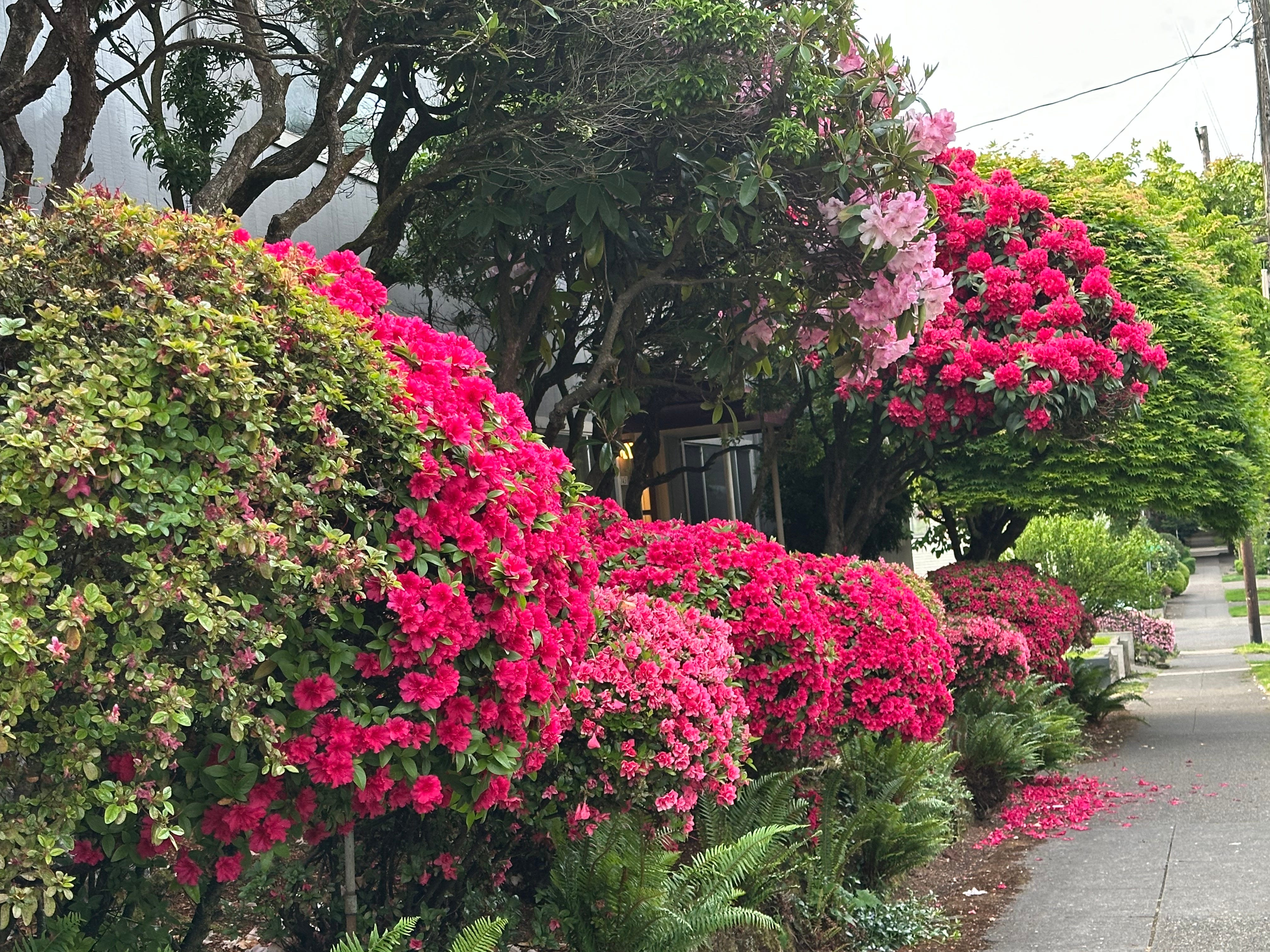
Meanwhile, my Portland neighborhood bursts with stunning spring flowers: azaleas, rhodies, iris, lavender, roses. They are glorious.
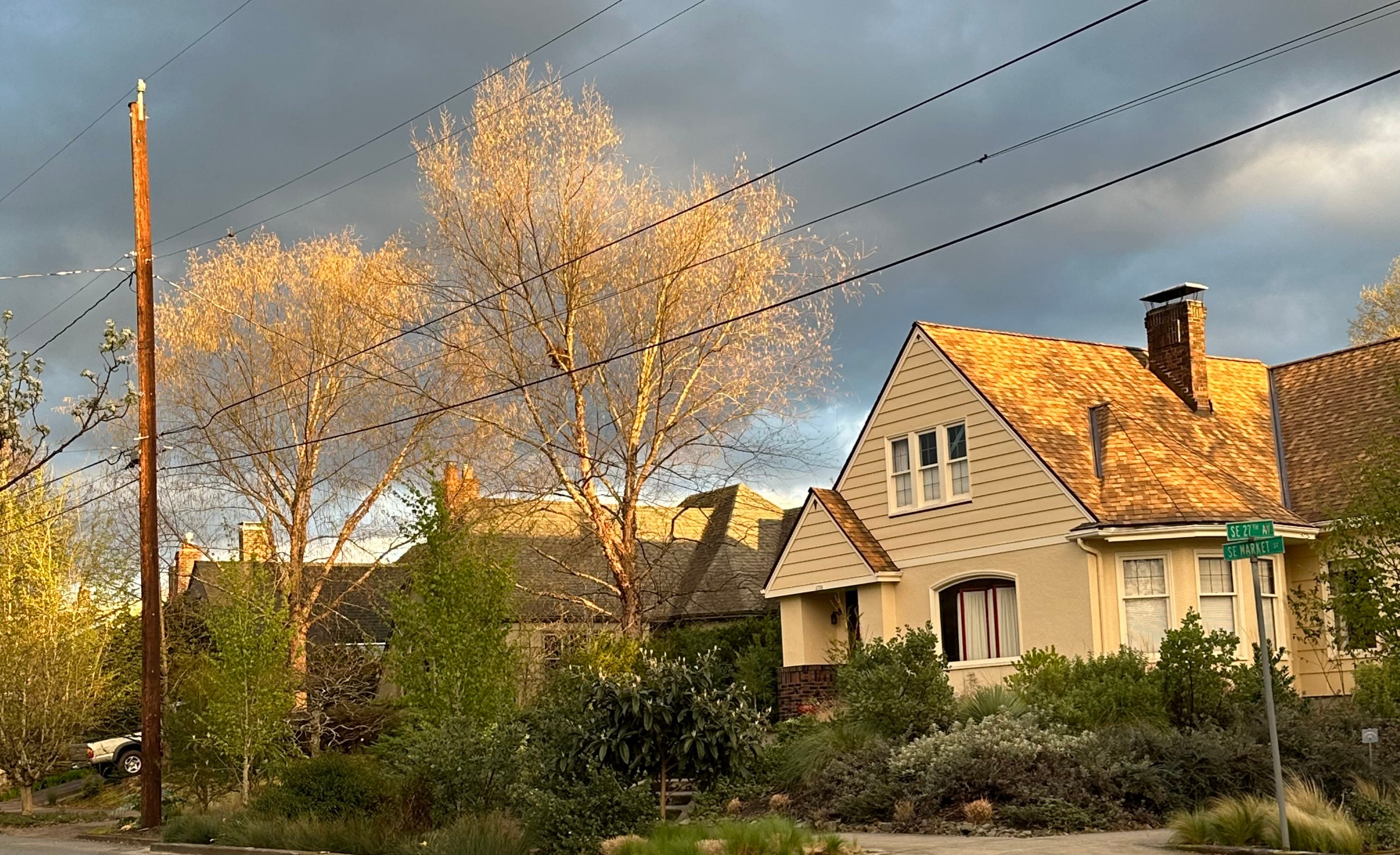
A house and trees are glorified by the setting sun of early spring in the Hosford-Abernathy neighborhood.
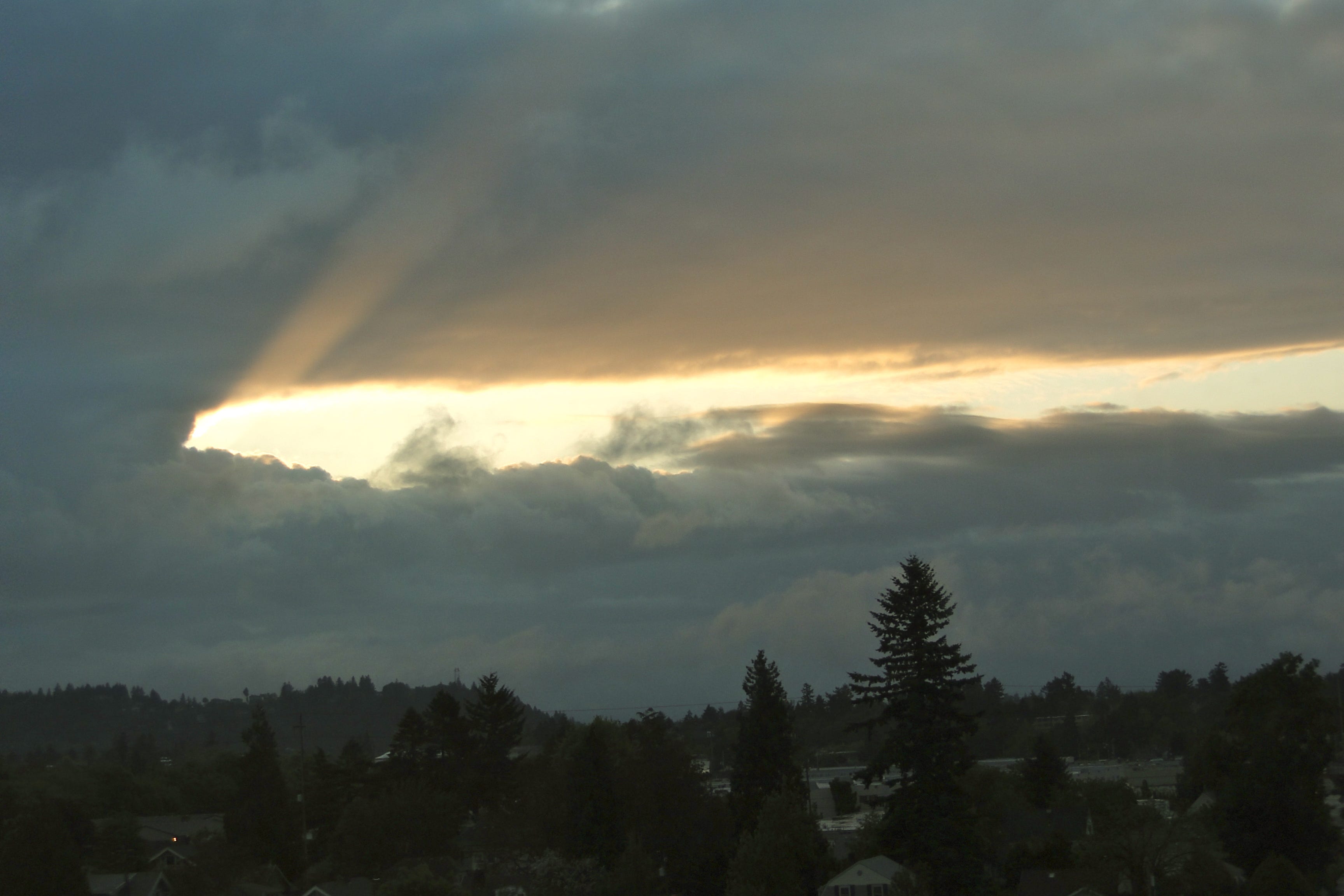
A “glory” is an optical phenomenon where water droplets in the atmosphere cause a halo-type effect. This sunrise is not a glory in that sense, but it has a similar phenomenological effect. I shot it out the window of the hospital room where my mother lay dying in May 2011. This photo speaks of endurance and love and resilience.
About my poetry
I didn’t set out to write poems or write about poems when I started my Substack back in 2022. I thought I would just write interesting thoughts and ideas and maybe publish some pictures. But then poems keep coming to me. At odd times, sometimes awkward or inconvenient times, they begged to be let out onto the page. I would be mulling a topic and BAM—there was a poem.
Then I found that I had a real affinity for writing poems for strangers, at venues like farmers markets and street fairs and Tuba Christmas.
This is how poems became woven into the fabric of Becoming, and I like it that way.
Writing poetry in Montavilla
I went to the Montavilla farmers market last Sunday to write poems for anyone who asked me. Several folks took me up on my free offer.
Frankly, I was not at the top of my form when I wrote these. It had been several month since I last tried this technique and I was rusty.
Aubrey wanted a poem about approaching summer.
Summer begins
The roses are out, but squash
And eggplants—they’re later.
Buy it all at the market. Bring your dog,
Bring your basket, your smile, your goodwill.
Watch the days grow.

Fireworks at 10 pm, coming soon.
Dawn before 6. Places to go,
Boats to row, lakes for swimming.
Trees decked out in green dresses.
Watch the days grow.

You remember summer, seasons past.
A glittering, a gleam, a drop
Of silver sunlight. Coconut smells
At the pool, at the beach.
And still the days grow.
Mauryn came to the market with Elicia, 6, and Lucian, 2 (almost 3)
Trio
Three in the family, kids playing with rocks.
Pet the dogs, smell the food, touch the plants.
What’s present today? A new world,
Sun and shadows, clouds and no clouds.
A future, a past, time to buy rhubarb.

Crowds grow and form, singles and pairs.
Our trio, intrepid, is off to explore.
Come out of hiding, a new world awaits,
Sun-washed and rain-drenched,
The stones of the market.
I may never go to the Montavilla farmers market again. The ground is gravel, not pavement, hard for my wheelchair to navigate. The little rocks are scrunchy and slippery at the same time. My wheels struggle to find purchase.
Susan, who was in a power wheelchair like me, agreed that navigating on gravel is hard. She asked for a poem about spirituality. I put strawberries in the title, then forgot to write about them. But I like the title, so I’m keeping it.
Spirituality and strawberries
Unkempt and upended, we nevertheless
Move forward, one corpuscle at a time.
The future claws at us, demanding.
We have no choice—but no!—
We have too many choices, thank the universe.
Each moment folds into the next.
Which to choose, which to let happen? Regardless,
We wobble our way toward Jerusalem.
Amanda said I could choose a topic. Instead, I chose iambs for rhythm. Oh, what the heck. Just make it a sonnet.
Chance meeting
We meet here at the market. Who knows why?
The universe conspires when we’re not looking.
Coincidences happen, then off they fly.
We can’t remember what a life we’re cooking.

Cooking? Like recipes, we think it’s written out—
All that we need to do, to see, to feel.
But what, when all is done, can we control?
The universe is laughing—here’s the deal:

Take life for what it offers, question not
The bumps and jolts that come along your way.
The dance goes on, we step and skip and trot.
Enough, enough! we gasp. Another day.

Chance meetings, yes, and yet they are the sum
Of all our yearnings, all the times to come.
Sayel, 9, wanted a surprise poem, meaning I got to choose the topic. So I wrote about
Surprises
Balloons that go pop!
Dogs that poop on your yard.
New shoes with sparkles.
A pretty birthday card.

Every day is new!
Isn’t that fine?
Pop up some popcorn—
And look! There’s a
Woodpecker eating
Bugs
In
A tree—
Right there!
Islah, sister to Sayel, asked for cats. She’s 4.
Cats
I like black cats
But ginger is nice.
Stripes or splotches, too.

Some cats look like tigers,
And all cats like
A good purr and a nap.

Do they come when you call?
Of course not! They’re cats!
I have thought about publishing a poll, asking readers whether I share too many poems, or too few, or just the right number. But in the end that doesn’t matter. The poems come. I share them. That is the essence of Becoming.
Check out
Bus discomfort
Coming back home from Lents on the bus, I watched as the driver started to slow for a yellow light, then gunned through the intersection on the red.
At the next stop, she picked up two obstreperous men, who were immediately in each other’s faces. They were standing right in front of me, exchanging threats and curses.
“You, the guy in the hat. Off the bus. Now!” The driver wasn’t having any of their drama. The man in the ball cap, who was probably a little drunk, stumbled off the bus, gesturing furiously and obscenely at it as it pulled away.
The driver asked if I was okay. I asked her if she was, but she brushed me off. “I don’t go there,” she said.
It’s unusual for me to feel uncomfortable on the bus, but I did feel uncomfortable on this bus for the rest of the ride home. I don’t know why. I didn’t feel threatened by the two men. Their focus was on each other. Maybe it was running the red light, maybe that the driver, who handled the altercation with such aplomb, was unwilling to admit that she might be rattled.
I was glad to finally get home.
Over and out
Every time someone likes a post, I get an email notification; that gives me a chance to remember and cherish that individual. And, let’s admit it, to feel good about my writing. So, if you enjoyed this post, click on ♡ to let me know.
I welcome comments, too. Please leave one. I am notified when you comment, too, so I will be sure to see it.
If you think others would like this newsletter, hit re-stack (the interlocking arrows at the top of this item). It gives you the option to add some words about the post you’re sharing. Be as pithy as you like.
Please consider supporting my writing financially. On PayPal, you can tip me in $5 increments. Or use the button below to buy a yearly subscription. It costs $50, less than $1 a week.
That’s everything that fits for this week.
Love, Fran
—30—
The dilapidated grey house was not far from where we stayed last year and there were people going in and out then. Depressing. Sorry you caught the aggressive energy on the bus, even if not directed at you. Enjoying all the azaleas and rhodies.
Absolutely love these photos. ❤️💕