Read like a child
I love children’s books. Maybe you do, too.

Check in
Get creative
Anything will do.
Make a meal, peel a carrot.
Break out the candles,
Eat candy in bed.

Push at your cuticles,
The world can just wait for you.
I am becoming,
Wait till I’m ready.
Mysterious chunk
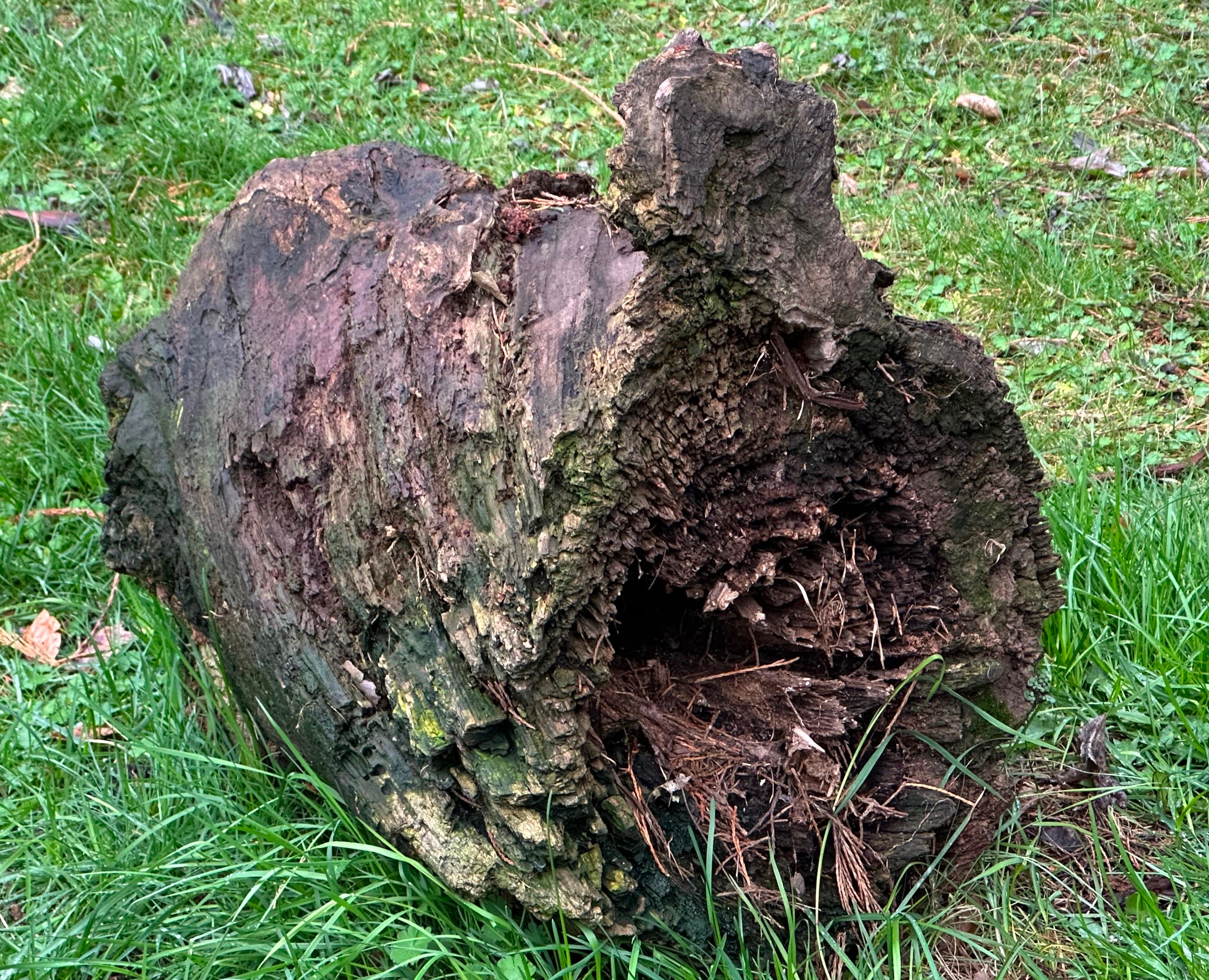
When I first saw this discarded stump, I saw a turkey, with the bump on the top as a head. But I can also see a rabbit, with the bump as ears and an eye southeast of it. The bump could also be a duck’s bill. Or a dog’s snout.
Talking to strangers
A fellow writer in the Zoom group I write with every weekday says she often strikes up conversations with strangers in Costco. An extrovert who lives in suburbia, she is hungry for connection, and Costco conversation is one way to meet that goal. She has met such extraordinary, interesting people this way!
As an introvert who lives in the city, I, too, feel the desire to connect. I strike up conversations where I can, at bus stops, on the light-rail train, in coffee shops. I ask other customers to reach items from high shelves at the supermarket. I ask workers on the street what they’re doing.
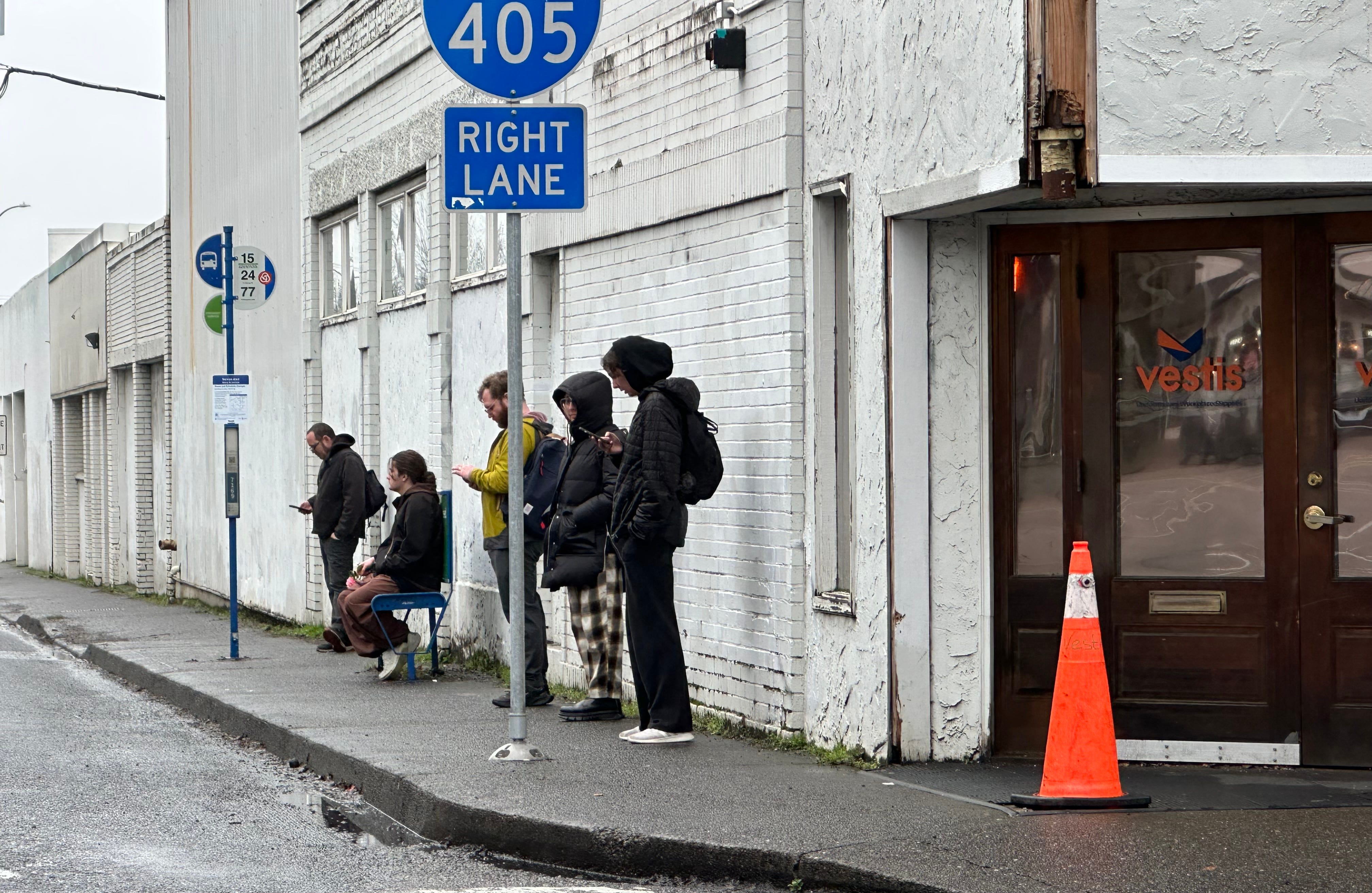
If you are shy, talking to strangers may seem impossible. But you can do it.
Working for a newspaper and thus having a reason to ask questions of someone I don’t know has made it easier for me. Now I know that most people are eager to talk about themselves, what they’re doing, what they like. It’s human nature to want to share.
As for the occasional sourpuss who doesn’t respond to your overature: that’s on them, not on you. You are sweet, inquisitive, sensitive and caring. Don’t take it personally; it’s not rejection. Go forth and meet someone else.
Children’s books
A few months ago, I found an unusual display in the Multnomah County Library’s Hawthorne Holds building. (That’s where you pick up library books while the Belmont library over on César Chávez Boulevard is being renovated. It’s due to reopen in August.)
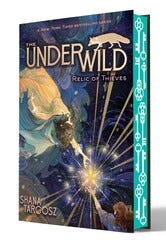
The display showed books with the inside edges facing out. The designs are called “sprayed edges” and are a new thing in children’s and young adult fantasy books.
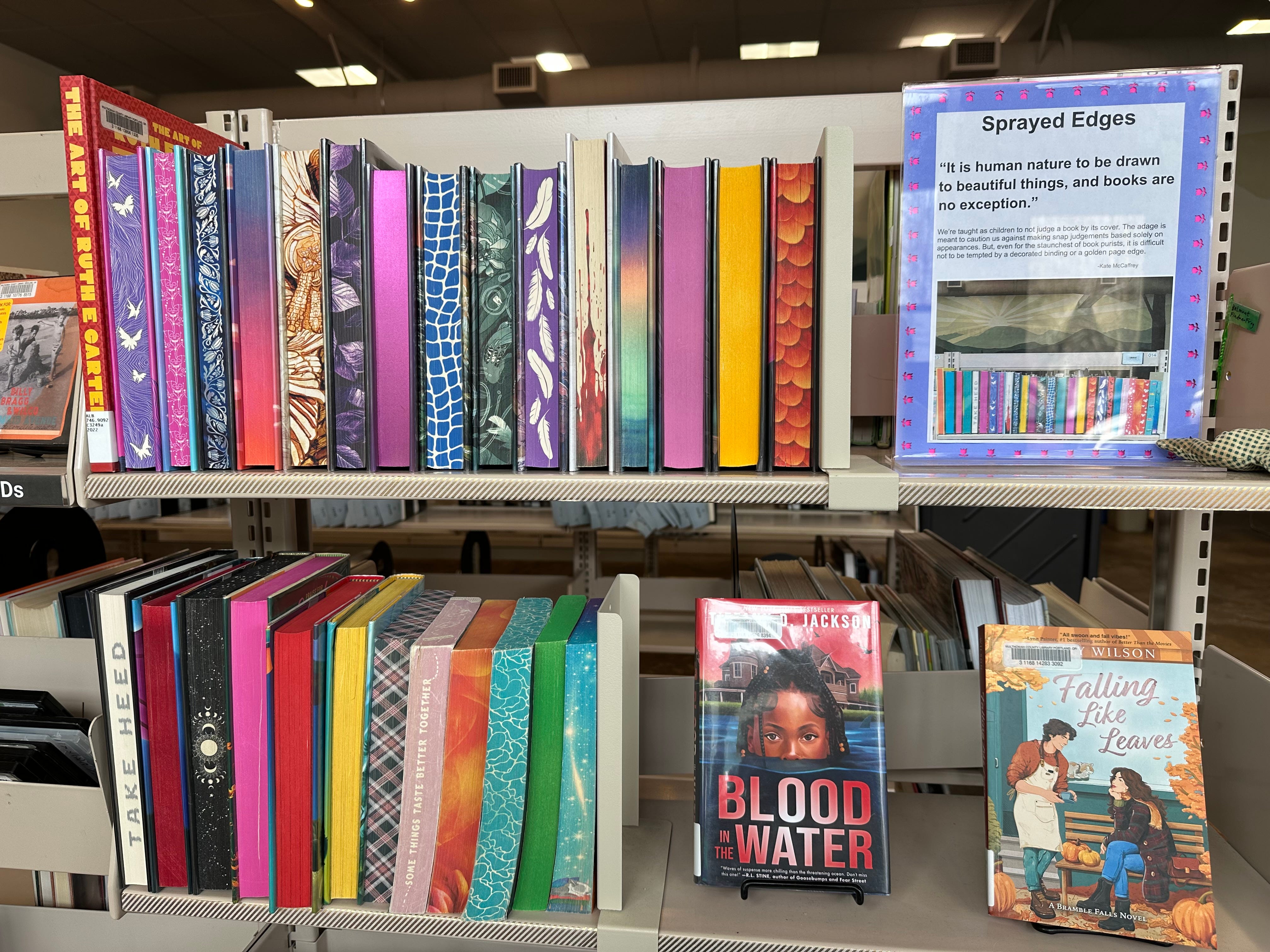
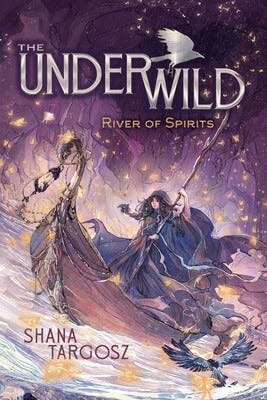
I picked one out at random, the lavender with the white feathers. That book was Underwild: River of Spirits. Hey! The writer, Shana Targosz, lives in Portland! I liked the book; maybe I could review it for Oregon Arts Watch. My editor said okay, and I ended up writing about River of Spirits and its sequel, Underwild: Thief of Relics. The review, which is here, also dwells on the subject of death in children’s books.
Never say die
It used to be, when I was a kid, that kids didn’t die in kids books. Maybe an animal, like in Old Yeller, or a distant parent, like in A Little Princess (and that parent didn’t even stay dead!). Gruesome images were rare. Aslan might die in the Narnia series by C.S. Lewis, but hey, that was an allegory.
Things changed in the 70s with Bridge to Terabithia, where a child dies in an accident. Modern kids read about the death of children in the Harry Potter books. The plot of The Hunger Games revolves around children killing other children.
Shana Targosz’s Underwild series is about the realm of the dead. The Underwild is a lawless subset of the ancient mythical Underworld where adventures lurk and nightmares come alive. Two 12-year-old kids wander among scary undead humans called mormos and encounter frightening water dragons known as chimera. Not to mention the occasional angry, friendly or demented Greek god.
The Multnomah County Library categorizes the Underwild books as juvenile, for middle-grade readers, rather than teen, or what used to be called YA, for young adult. The Beaverton library has placed the first book in the juvenile section and the second on the teen shelves.
I guess today’s kids can handle the creepiness of life in the Underworld. These books are best sellers. I like them a lot. Targosz is a great writer who crafts compelling stories.
The best books for children
At this site, you can check out the School Library Journal’s list of the 100 best children’s books and click on the titles you have read. I’ve read 53, ranking in the 94th percentile of those taking the challenge. The average was 31. My score would have been higher if I counted movies I’ve seen based on books. But that seemed like cheating.
I choked up as I went through the list, being reminded of favorite titles like The Dark is Rising, The View from Saturday, The Children of Green Knowe, Caddie Woodlawn (a favorite of my mother’s along with the Little House books), The Thief, The Book of Three, The Witch of Blackbird Pond, The Wind in the Willows. Even the books I haven’t read, I’ve hear of.
Here are the top 16. I’ll bet some of these are your favorites, too.
Charlotte’s Web, E.B. White
A Wrinkle in Time, Madeleine L’Engle
Harry Potter and the Philosopher’s Stone, J.K. Rowling (that’s the British title; in the U.S. it’s Harry Potter and the Sorcerer’s Stone)
The Lion, the Witch and the Wardrobe, C.S. Lewis
From the Mixed-up Files of Mrs. Basil E. Frankweiler, E.L. Konigsburg
Holes, Louis Sacher
The Giver, Lois Lowry
The Secret Garden, Frances Hodgson Burnett
Anne of Green Gables, L.M. Montgomery
The Phantom Tollbooth, Norton Juster
The Westing Game, Ellen Raskin
The Hobbit, J.R.R. Tolkien
Bridge to Terabithia, Katherine Paterson
Harry Potter and the Prisoner of Azkaban, J.K. Rowling
Because of Winn-Dixie, Kate DiCamillo
Harriet the Spy, Louise Fitzhugh
I’ve read all of these except for Anne of Green Gables and The Phantom Toll Booth. My best friend from college, Judy Weinsoft, a librarian herself, recommended The Phantom Toll Booth to me but I abandoned it after a few chapters because I thought it was too twee.
Complex tropes
Today’s young readers can handle dark, complex ideas and themes, sometimes horror. Think Philip Pullman’s His Dark Materials or R.L Stine’s Goosebumps. My attempt to read Garth Nix began and ended with Mr. Monday. I couldn’t handle the horror. I don’t understand the allure of vampires, either, so Stephenie Meyer’s Twilight books are out. I love Maggie Stiefvater, but not her werewolf series.
On our library shelves, you can find juvenile books with gay and trans characters and teen books that deal with abortion, suicide and copious instances of the f-word. Really, everything goes with today’s plugged-in young readers.
I asked Amy Clark, the youth materials selector for books for the Multnomah County Library, how she chooses books. She relies on reviews from respected publications like Kirkus Reviews, Publishers Weekly and the School Library Journal. Designating a book as J for juvenile or Y for youth or teen is a function of weighing the age of the characters in the book and sometimes the age the publisher says the book is aimed at.
Color coded
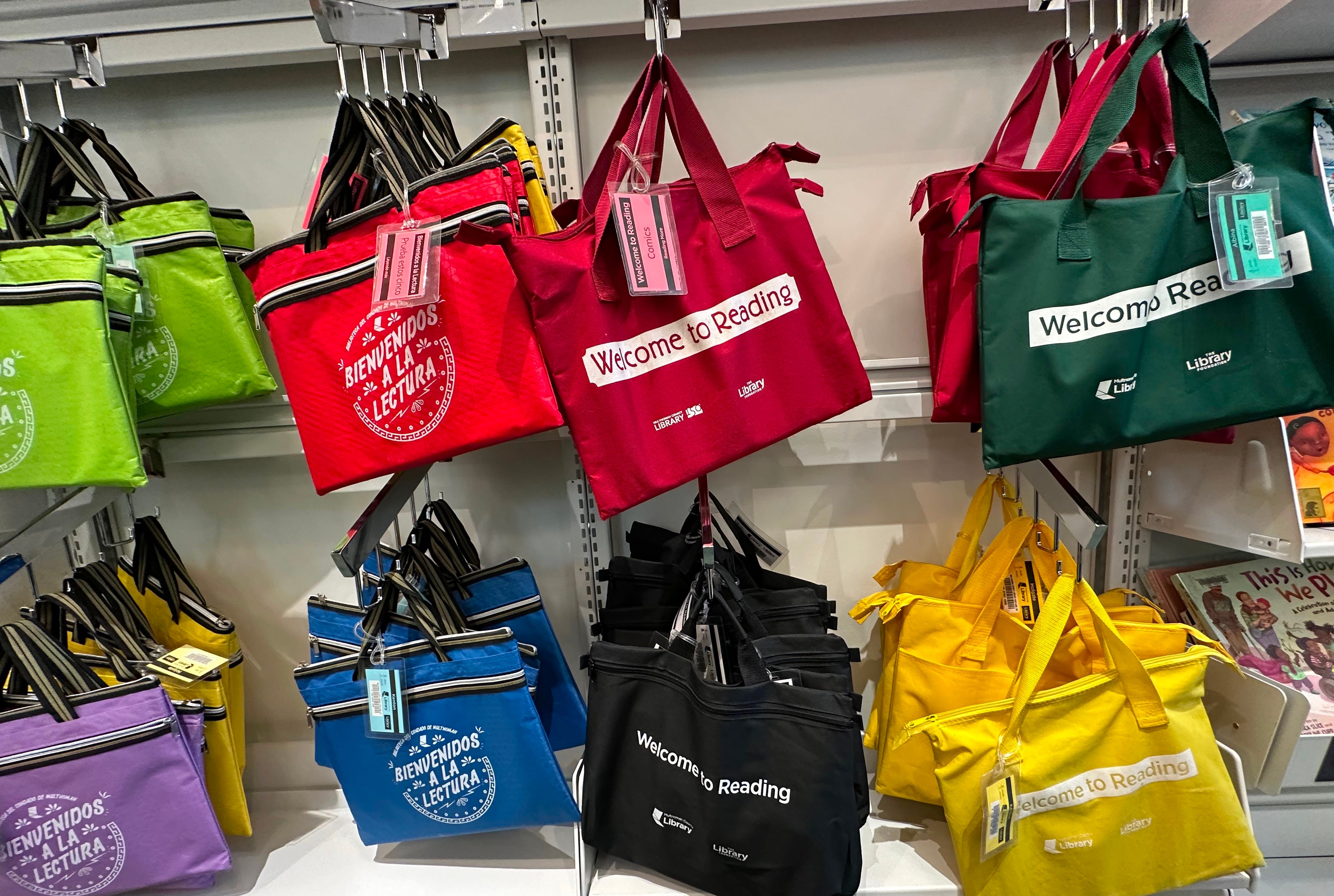
Books for beginning readers, up to grade 3, are classified at Multnomah County in four levels by color, ranging from yellow for pre-readers, through blue, (sounding out words), red (reading more independently) and green (more complexity, fewer pictures).
Parents can check out colorful bags at the library with a selection of books and materials in each of the reading levels. The black bags contain “decodable” materials—books and games that teach reading skills through techniques including phonics.
On Substack, Karen Rodriguez at Literary Fancy has published a running series about “wholesome” children’s classics that actually traumatize kids. Her No. 1 example: Charlotte’s Web. She writes:
Charlotte was the best friend Wilbur would ever have. He outlives her. He has to live with that. We gave this book to children who don’t yet understand mortality and watched them learn what death means through a spider.
Your turn, dear reader
Do you still read children’s books now that you are all grown up? Which ones do you like? I discovered Megan Whalen Turner, Cinda Williams Chima, Susan Cooper, Maggie Stiefvater, Lucy Boston, Jonathan Stroud, Lloyd Alexander, Philip Pullman, Madeleine l’Engle and many other great children’s writers as an adult. Their stories have enriched my life immeasurably.
What books or authors do you like? What genres? Are they different from what you liked when you were little?
Poetry break
Free form
Toe in the water
Time to explore
Writing without meter—
I’m not sure this will work.

How can words, just words, carry a poem?
How can wings, just wings, sustain a bird?

Beneath everything is music
Melody in my ears, rhythm in my heartbeat, my gait.
All the world a pattern, a symphony, living things tucked into the vertices of consciousness.

Lucky I am, that’s all. Lucky.
To be in this world, feel earth breathe on my skin.
To walk with Spirit, grand and encompassing,
Sharing and holding, our breath, our being.
Writing letters
Kathy (@kathy622729) on Substack wrote a note about President Barak Obama’s practice of writing letters.
Here’s my paraphrase of how it went:
Out of the 40,000 or so letters that arrived at the White House every day, President Obama would choose 10. He would take them to the Treaty Room, on the second floor, to work in private.
Every night, for all eight years he was in office, Obama wrote hand-written replies to the day’s 10 letters, using a black felt-tipped pen on a yellow legal pad. He then made a clean copy of each on White House stationery.
Kathy writes: “His lifelong correspondence director, Fiona Reese, confirmed that Obama often wept privately while reading certain letters, folding them carefully before writing responses so personally detailed and emotionally present that recipients frequently described the experience of receiving them as the most significant moment of their lives.”
Adopting the practice
This weekend, maybe in a spare moment, consider writing a personal note to someone you love or admire and miss. Or to someone you have negative feelings toward that you need to let go. Jot a short note or a longer missive. Write a paragraph or a poem.
Then make a clean copy. Encase it in a comfortable envelope. Put a stamp on the front and maybe a sticker on the back and send it forth.
Writing a letter by hand, personifying the written word in this way, is so powerful. I hope you will do it.
Check out
Streetcar calisthenics
More than once I’ve seen passengers use the bars and straps in Portland’s light-rail trains and streetcars as props and hand-holds for stretching and exercise. Last week, a man was chinning himself in a streetcar.
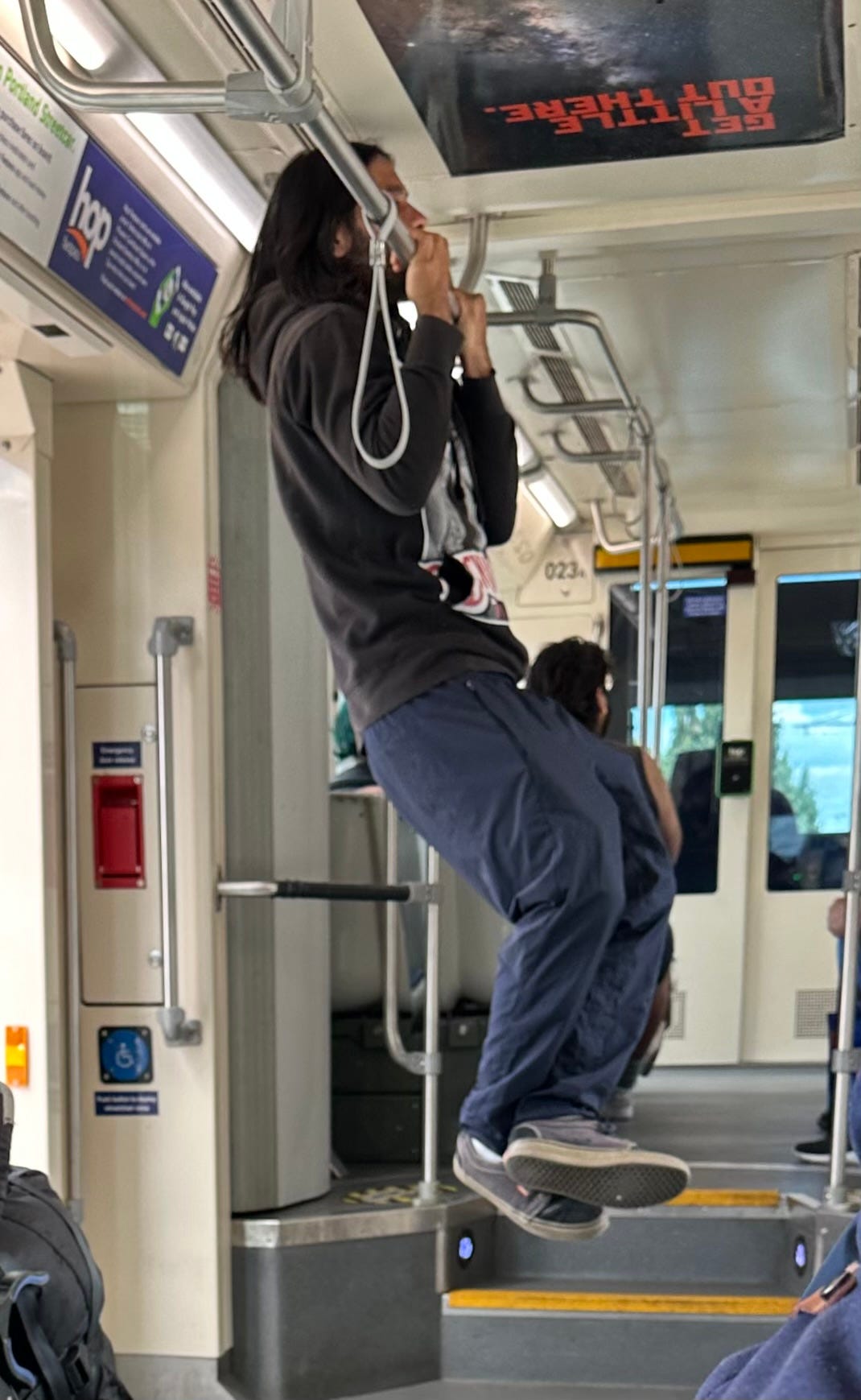
Sometimes I pull on the commuter straps dangling above me to stretch and strengthen my arms.
Next week, I’m writing about getting to know Portland’s Parkrose neighborhood.
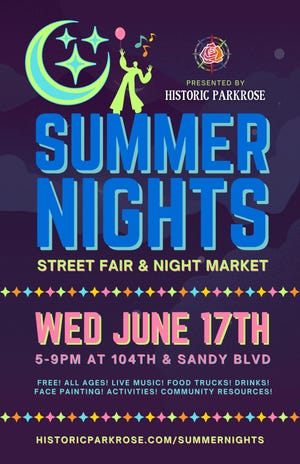
Meanwhile, a group called Historic Parkrose is holding the Fifth Annual Summer Nights Street Fair and Night Market in the area. It’s next Wednesday, June 17, from 5 to 9 pm. Vendors and musical acts will set up at Northeast 104th and Sandy.
Till next week
Thanks for reading. I hope you’ll return next week. Becoming comes to you every Saturday at about 7 pm. If you subscribe, you’ll get an email notice when I publish.
—Fran
—30—
Just more ideas now in my brain. Thanks Fran. We have quite a few children’s books. Two sons and four grand boys. Now they are all readers.
Surprisingly (or not!), I've read exactly 31 of them - the very average. But I only started reading these books when I was 30, when my first daughter was born. It was a shock to me when Philip's grandmother and aunts sent us a big parcel of the most popular American and English children's books, and I realised that I knew nothing about contemporary Anglo-American children's literature. By that time, I'd been learning English for over 20 years and teaching it for over 10. I should have at least heard of Dr. Seuss, but I hadn't. I spent my long maternity leave preparing a special course for the teachers of English whom I taught. Every time I gave this course, I would ask teachers which 20th-century English or American children's writers they knew, and they would invariably mention Alexander Milne, Mark Twain and then J.K. Rowling. It wasn't just a Russian thing. I once talked to English teachers from Italy, and it was the same.
The author I didn't find on this list, and whose books I absolutely adore, is Michael Morpurgo.